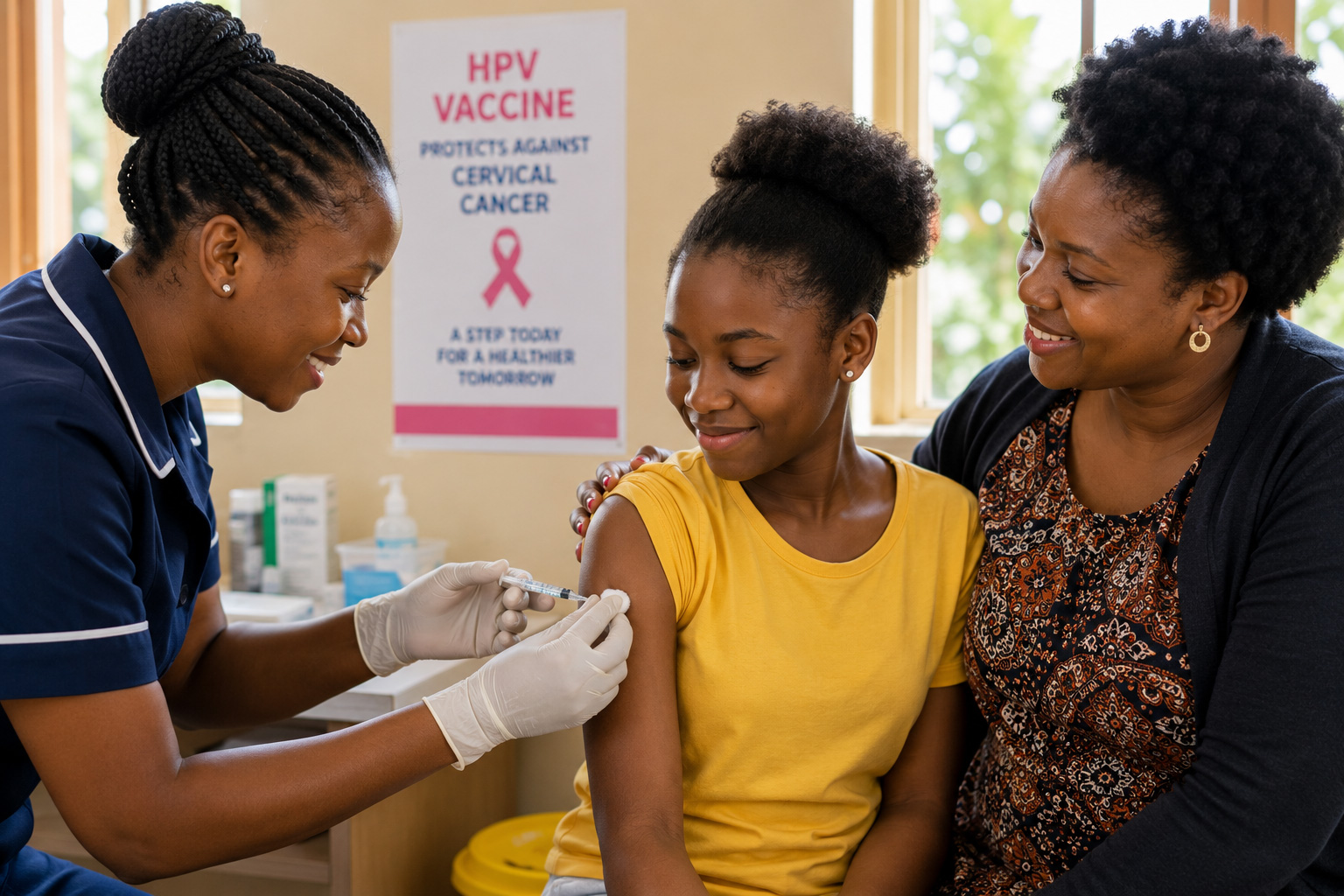
HPV Vaccination in Eswatini: What Parents and Young Women Should Know
Cervical cancer is one of the most preventable cancers.
Yet in Eswatini, it remains a major health concern for women.
One of the most powerful tools available to change that is the human papillomavirus (HPV) vaccine.
Eswatini introduced its national HPV vaccination programme in 2023 and has continued expanding access to vaccination as part of the country’s efforts to reduce cervical cancer. In 2025, the Ministry of Health expanded HPV vaccination to include girls and young women aged 15–20, alongside the original target group of girls aged 9–14.
But what exactly is HPV? Why is the vaccine given to young people? And does getting vaccinated mean cervical cancer screening will no longer be necessary?
Here are the basics every parent and young woman should understand.
What Is HPV?
HPV stands for human papillomavirus.
It isn’t one single virus. HPV refers to a large group of related viruses, some of which can cause health problems including genital warts and several types of cancer.
HPV is extremely common and is primarily transmitted through intimate skin-to-skin and sexual contact.
Many people who become infected will never know that they have HPV because the immune system can clear the infection naturally.
The concern is when infection with certain high-risk HPV types persists.
Over time, persistent infection can cause abnormal changes in cells that may eventually develop into cancer.
HPV is responsible for the vast majority of cervical cancers.
Why Cervical Cancer Matters in Eswatini
Cervical cancer is a particularly important health issue for women in Eswatini.
WHO has identified cervical cancer as the leading cancer among women aged 15–49 in Eswatini.
Approximately 360 new cervical cancer cases are recorded each year, according to WHO reporting on the country’s HPV vaccination programme.
The burden is also affected by Eswatini’s HIV epidemic.
Women living with HIV have a higher risk of persistent HPV infection and cervical disease, making both HPV prevention and cervical cancer screening particularly important.
How Does the HPV Vaccine Help?
The HPV vaccine trains the immune system to recognise and protect against HPV types associated with cervical cancer and other diseases.
The greatest benefit occurs when vaccination takes place before a person has been exposed to HPV.
That is why HPV vaccination programmes traditionally focus on girls during late childhood and early adolescence.
The vaccine isn’t given at this age because healthcare authorities assume young adolescents are sexually active.
It is given early because vaccines work best when protection is established before future exposure occurs.
Think of it in the same way as other childhood vaccinations: protection is created before the disease becomes a threat.
Who Is Being Vaccinated in Eswatini?
Eswatini launched nationwide HPV vaccination in June 2023, initially focusing on girls aged 9–14.
During the country’s 2025 African Vaccination Week campaign, HPV vaccination was expanded to include girls and young women aged 15–20, making Eswatini one of the countries in the region taking steps to provide wider protection against cervical cancer.
WHO’s 2025 Eswatini annual report recorded HPV vaccination coverage of 74.4% among girls aged 9–14.
Parents and young women who are unsure whether they currently qualify for vaccination should check with their local health facility or healthcare professional, as vaccination programmes and catch-up campaigns can change.
Is the HPV Vaccine Safe?
HPV vaccines have been studied extensively.
WHO reports that evidence from clinical trials and post-marketing safety monitoring across multiple continents supports the safety of HPV vaccines.
As with most vaccinations, temporary side effects can occur.
These may include:
- Pain or tenderness where the injection was given
- Redness or swelling at the injection site
- Mild fever
- Headache
- Tiredness
- Muscle aches
These effects are generally temporary.
If you have concerns about vaccination because of a medical condition, previous vaccine reaction or medication you take, discuss them with a healthcare professional.
Does the HPV Vaccine Cause Infertility?
This is one of the myths that can make parents hesitant about HPV vaccination.
There is no credible evidence that HPV vaccination causes infertility.
The vaccine is specifically intended to protect young people against infections that can later contribute to serious disease.
Cervical cancer itself — and some treatments required for advanced cervical cancer — can have significant effects on reproductive health.
Preventing HPV-related disease is therefore an important part of protecting future health.
Why Vaccinate Someone Who Isn’t Sexually Active?
Because that is when vaccination is most useful.
HPV exposure usually occurs after a person becomes sexually active.
Vaccinating beforehand allows the immune system to develop protection before the virus is encountered.
Waiting until someone is older or believes they may have been exposed to HPV can reduce some of the preventative advantage of early vaccination.
This is why vaccination during adolescence should be seen as cancer prevention, not as a statement about sexual activity.
Can Boys and Men Get HPV?
Yes.
HPV does not only affect women.
Men can contract and transmit HPV, and certain HPV types are associated with cancers affecting areas including the anus, penis and throat.
Globally, HPV vaccination policies differ between countries, with some programmes vaccinating both boys and girls.
If you have questions about HPV vaccination outside Eswatini’s routine programme, discuss your individual circumstances with a healthcare professional.
What If Someone Already Has HPV?
Having previously been exposed to one type of HPV does not necessarily mean someone has been exposed to every HPV type covered by a vaccine.
However, vaccination does not treat an existing HPV infection.
Its purpose is prevention.
A healthcare professional can advise whether vaccination may still be appropriate based on age, health history and current national recommendations.
Does Vaccination Mean Women No Longer Need Cervical Cancer Screening?
No.
This is extremely important.
The HPV vaccine significantly reduces the risk of cervical cancer, but it does not eliminate the need for cervical cancer screening.
No vaccine protects against every HPV type capable of causing cervical cancer.
Women should therefore continue participating in recommended cervical screening programmes even if they were vaccinated when younger.
Screening can identify abnormal cervical changes before they become cancer.
When abnormal cells are detected and treated early, progression to invasive cervical cancer can often be prevented.
What Does Cervical Cancer Screening Involve?
Different cervical screening methods may be used depending on the healthcare facility and national programme.
These can include:
- HPV testing
- Pap smears or cervical cytology
- Visual inspection methods
A healthcare professional can advise which screening method is appropriate based on your age, medical history and individual risk factors.
Women living with HIV may require particular attention to cervical cancer screening because HIV can increase the likelihood of persistent HPV infection.
Are There Early Symptoms of Cervical Cancer?
One of the challenges with cervical cancer is that early disease may cause few or no obvious symptoms.
This is why screening is so valuable.
As cervical disease progresses, possible symptoms can include:
- Bleeding between periods
- Bleeding after sex
- Bleeding after menopause
- Unusual or persistent vaginal discharge
- Pelvic pain
- Pain during sex
These symptoms do not automatically mean that someone has cervical cancer.
Many other conditions can cause similar symptoms.
But unexplained or persistent changes should be assessed by a healthcare professional rather than ignored.
Prevention Works Best When We Use More Than One Tool
Reducing cervical cancer in Eswatini isn’t dependent on one intervention.
Several strategies work together:
HPV vaccination helps prevent infection with important cancer-causing HPV types.
Cervical screening helps detect abnormal cells before they become cancer.
HIV testing and treatment are particularly important because effective management of HIV supports overall immune health.
Healthcare access and awareness help women seek assessment when symptoms or concerns arise.
Together, these measures can dramatically change the future impact of cervical cancer.
Parents Have an Important Role
For many girls, the decision to receive HPV vaccination is made while they’re still under the care of parents or guardians.
That makes accurate information especially important.
Before deciding against vaccination because of something you’ve heard from friends, social media or messaging groups, ask a healthcare professional.
Questions are welcome.
Ask:
- What does the vaccine protect against?
- Is my child eligible?
- How many doses are recommended?
- What side effects should I expect?
- What if my child has another medical condition?
- What happens if a dose was missed?
Making an informed decision is very different from making a decision based on fear.
Young Women Should Ask About Their Own Prevention Too
If you’re a teenager or young adult, you can begin taking a more active role in understanding your health.
Ask whether you have received the HPV vaccine.
If you’re unsure, speak to a parent, caregiver or healthcare professional.
Ask when cervical cancer screening will become appropriate for you.
Know your HIV status.
And don’t ignore reproductive health symptoms because you’re embarrassed to discuss them.
These conversations are simply part of healthcare.
A Generation With an Opportunity to Prevent Cancer
Eswatini has already made substantial progress with HPV vaccination.
The country’s programme reached tens of thousands of girls after its launch, expanded to older adolescents and young women, and continues to form an important part of national cervical cancer prevention efforts.
The goal is bigger than achieving a vaccination statistic.
It is a future where fewer women develop a cancer that we increasingly have the tools to prevent.
Have Questions About HPV or Women’s Health?
If you have questions about HPV, vaccination, cervical screening, unusual symptoms or another reproductive health concern, speak to a qualified healthcare professional.
TruMD Eswatini provides convenient access to medical professionals through online consultations, allowing you to ask questions about your health privately and receive guidance on the appropriate next step.
Prevention starts with good information.
Take control of your health. Talk to a doctor with TruMD Eswatini.