A Cough That Won’t Go Away? Know the Warning Signs of Tuberculosis
A cough is one of the most common reasons people feel unwell.
It might follow a cold, come with seasonal flu or disappear after a few days without treatment.
But what happens when it doesn’t go away?
In Eswatini, a persistent cough deserves attention because tuberculosis — commonly known as TB — remains an important public health concern.
The country has made significant progress against TB over the past two decades, but thousands of people still develop the disease each year.
The good news is that TB is preventable, treatable and curable.
The key is recognising possible symptoms and getting tested early.
What Is Tuberculosis?
Tuberculosis is an infectious disease caused by bacteria called Mycobacterium tuberculosis.
TB most commonly affects the lungs, although it can also affect other parts of the body including the lymph nodes, bones, kidneys and brain.
When someone has infectious TB in the lungs or throat, bacteria can spread through the air when they:
- Cough
- Sneeze
- Speak
- Sing
TB is more likely to spread between people who spend extended periods together, particularly in poorly ventilated indoor spaces.
It does not usually spread through casual contact such as shaking hands, sharing food or touching surfaces.
TB Remains Important in Eswatini
Eswatini has made considerable progress in reducing tuberculosis.
WHO data shows that TB incidence has fallen substantially compared with levels seen two decades ago.
However, Eswatini remains among the countries with a high burden of TB and TB/HIV co-infection.
WHO estimated that approximately 319 people per 100,000 population developed TB in 2024.
The biggest challenge isn’t simply treating people who have already been diagnosed.
It is finding people who have TB but don’t yet know it.
In 2024, only around 55% of the estimated TB cases in Eswatini were diagnosed and treated.
That means there may be people living, working and socialising with untreated TB without realising they have the disease.
Recognising symptoms matters.
The Cough That Deserves Attention
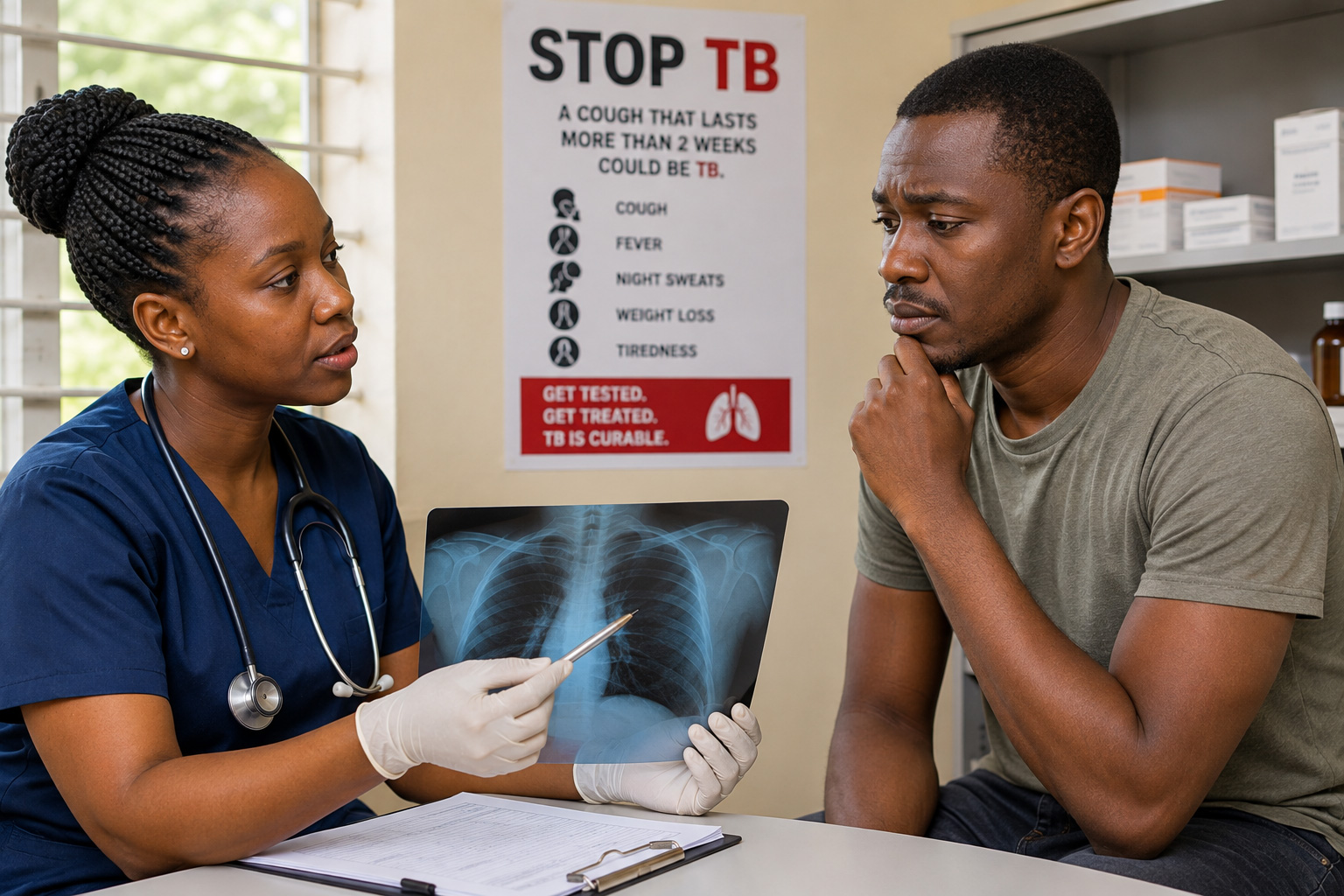
One of the most recognised symptoms of pulmonary TB is a persistent cough.
A cough associated with a cold or other minor respiratory infection will usually begin improving as the illness settles.
A cough that continues for an extended period — particularly if it is accompanied by other symptoms — should be assessed.
Possible TB symptoms can include:
- Persistent coughing
- Coughing up sputum or phlegm
- Coughing up blood
- Chest pain
- Fever
- Night sweats
- Unexplained weight loss
- Loss of appetite
- Persistent tiredness or weakness
Not everybody with TB experiences every symptom.
And having these symptoms does not automatically mean you have tuberculosis.
Many respiratory illnesses can cause similar symptoms.
Testing is what provides the answer.
Don’t Wait Until You’re Very Sick
One of the problems with TB is that symptoms may develop gradually.
Someone may initially think:
“It’s just a cough.”
Then:
“I’ve probably got flu.”
Then:
“It will disappear eventually.”
Weeks can pass while the person continues becoming more unwell.
During that time, untreated infectious pulmonary TB can potentially spread to other people.
Earlier testing benefits both the person who is sick and the people around them.
What Do TB Night Sweats Feel Like?
Night sweats are another symptom sometimes associated with TB.
This doesn’t mean simply feeling warm under heavy blankets.
More significant night sweats can cause someone to wake with noticeably damp clothing or bedding despite sleeping in a reasonably comfortable environment.
Night sweats can have many causes besides TB.
But recurring night sweats combined with persistent cough, fever, unexplained weight loss or fatigue should be mentioned to a healthcare professional.
Unexplained Weight Loss Matters Too
Losing weight because you’ve deliberately changed your diet or exercise habits is very different from losing weight without knowing why.
TB can sometimes cause:
- Reduced appetite
- Gradual weight loss
- Weakness
- Loss of energy
If your clothes are becoming noticeably looser and you haven’t intentionally been trying to lose weight, don’t simply ignore it.
Persistent unexplained weight loss should be medically assessed whether or not TB is suspected.
TB and HIV Are Closely Connected
This is particularly important in Eswatini.
HIV weakens the immune system and makes it easier for latent TB infection to progress to active TB disease.
WHO reports that Eswatini remains among the countries with the world’s highest combined TB and HIV burden.
In 2023, approximately 53.5% of people with TB in Eswatini were also living with HIV.
The country has, however, made strong progress in integrating TB and HIV care.
In 2025, WHO reported that around 98% of TB patients knew their HIV status, and 98% of people with both TB and HIV were receiving antiretroviral treatment.
Knowing both your TB and HIV status can therefore be an important part of protecting your health.
Does Having HIV Mean You Will Get TB?
No.
Living with HIV does not mean you will automatically develop tuberculosis.
Effective antiretroviral treatment supports the immune system and significantly improves health outcomes.
People living with HIV may also be offered TB preventive treatment when appropriate to reduce their risk of developing active TB disease.
If you’re living with HIV, continue taking your antiretroviral treatment consistently and attend recommended healthcare appointments.
Do not stop your medication because you’re feeling healthy.
What Is Latent TB?
Not everyone infected with TB bacteria becomes sick.
Sometimes the immune system controls the bacteria and prevents them from causing active disease.
This is known as TB infection or latent TB infection.
Someone with latent TB:
- Does not have symptoms of active TB
- Does not feel sick because of TB
- Cannot spread TB to other people
However, the bacteria can remain in the body and may later become active, especially if the immune system becomes weakened.
Certain people may be offered preventative treatment to reduce this risk.
Who Is More at Risk of Developing TB Disease?
Anyone can develop TB, but the risk is higher in certain situations.
These may include:
- Living with HIV
- Close contact with someone who has infectious TB
- Malnutrition
- Diabetes
- A weakened immune system
- Certain chronic medical conditions
- Smoking
- Excessive alcohol use
- Living or working in crowded environments
- Previous TB infection
If you’ve recently been in close contact with someone diagnosed with TB, tell a healthcare professional.
You may need screening even if you currently feel well.
How Is TB Diagnosed?
You cannot reliably diagnose tuberculosis from symptoms alone.
Healthcare professionals may use several methods to investigate suspected TB depending on the patient’s symptoms and circumstances.
These can include:
- Sputum testing
- Molecular TB tests
- Chest X-rays
- Clinical assessment
- Other laboratory investigations
Modern molecular tests can identify TB bacteria relatively quickly and can also help identify whether certain forms of drug resistance may be present.
The appropriate tests depend on the individual patient.
What Happens If the Test Is Positive?
TB can be treated.
Standard TB treatment involves taking a combination of antibiotics for a prescribed period.
It is extremely important to take the medication exactly as directed.
Even when symptoms improve after treatment begins, the TB bacteria may not yet have been completely eliminated.
Stopping treatment early can allow the infection to return and may contribute to drug-resistant TB.
Why Completing TB Treatment Matters
A person starting treatment may feel considerably better within weeks.
Their cough may improve.
Their appetite may return.
They may regain weight.
That can create the impression that treatment is no longer necessary.
But TB treatment must be completed according to the schedule prescribed by the healthcare team.
Missing doses or stopping early increases the risk that:
- TB returns
- Treatment fails
- The infection remains transmissible
- Drug-resistant TB develops
If medication is causing side effects, don’t simply stop taking it.
Contact your healthcare provider so the problem can be assessed.
What Is Drug-Resistant TB?
Drug-resistant TB occurs when the TB bacteria are resistant to one or more medicines normally used to treat the disease.
This can make treatment more complicated.
Drug-resistant TB remains a concern in Eswatini.
WHO estimated around 13 cases of multidrug- or rifampicin-resistant TB per 100,000 people in 2024.
However, treatment has improved significantly.
Eswatini has introduced shorter, all-oral treatment regimens for eligible patients with drug-resistant TB, replacing older approaches that could require lengthy treatment and painful injections.
These advances make completing treatment more manageable for many patients.
Can You Catch TB From Someone Receiving Treatment?
A person with untreated infectious pulmonary TB may spread bacteria through the air.
Once effective treatment has started, infectiousness generally decreases.
However, exactly when someone is no longer considered infectious depends on their individual situation and response to treatment.
Follow the advice of the treating healthcare team rather than assuming someone is immediately non-infectious once medication begins.
Ventilation Matters
Because TB spreads through the air, good ventilation can reduce the concentration of infectious particles indoors.
Where practical:
- Open windows and doors.
- Allow fresh air to circulate.
- Avoid spending prolonged periods in small, poorly ventilated rooms with someone who may have untreated infectious TB.
- Follow infection-control guidance provided by healthcare professionals.
Outdoor environments generally allow infectious particles to disperse more easily than enclosed indoor spaces.
Don’t Stigmatise Someone With TB
TB is an infectious disease.
It isn’t a reflection of someone’s character, cleanliness or worth.
Stigma can actually make TB harder to control.
If people are afraid that family members, colleagues or communities will judge them, they may delay:
- Seeking healthcare
- Getting tested
- Telling close contacts
- Taking treatment
- Asking for support
Someone receiving treatment for TB needs healthcare and support — not shame.
Open conversations help communities respond to TB more effectively.
Could Your Child Have TB?
Children can also develop tuberculosis.
TB can be more difficult to diagnose in children because they may not develop the same obvious symptoms seen in adults and may struggle to produce a sputum sample.
Possible warning signs may include:
- Persistent coughing
- Poor weight gain
- Weight loss
- Fever
- Reduced energy
- Decreased appetite
- Close contact with someone who has TB
If a child has been living with or regularly exposed to somebody diagnosed with infectious TB, tell a healthcare professional.
Children who have been exposed may need screening even if they appear healthy.
A Previous TB Infection Doesn’t Make You Immune
If you’ve previously been treated successfully for TB, you can still develop TB again.
This can happen because an infection returns or because you are exposed to TB bacteria again later.
So if you’ve previously had TB and develop another persistent cough or familiar symptoms, don’t assume it cannot be TB.
Get assessed.
When Should You Speak to a Doctor?
Seek medical advice if you experience:
- A cough that isn’t improving
- Persistent fever
- Night sweats
- Unexplained weight loss
- Coughing up blood
- Ongoing chest pain
- Persistent fatigue
- Symptoms after close exposure to someone with TB
Coughing up a significant amount of blood, severe breathing difficulty, loss of consciousness or another serious symptom requires urgent medical attention.
Telemedicine Can Be the First Conversation
TB cannot be confirmed through a virtual consultation alone.
Testing is necessary.
However, telemedicine can help you decide whether your symptoms need further investigation.
Through TruMD Eswatini, you can discuss:
- How long you’ve been coughing
- Other symptoms
- Whether you’ve lost weight
- Recent TB exposure
- HIV status where relevant
- Medication you take
- Previous TB infection
- Whether you need an in-person assessment
A healthcare professional can then advise on the appropriate next step and whether TB testing or another investigation is required.
The important thing is not to keep waiting when symptoms persist.
Eswatini Can Continue Turning the Corner on TB
Eswatini’s TB story is not only about disease.
It is also about progress.
TB incidence has fallen dramatically compared with previous decades.
Treatment for drug-resistant TB has improved.
Integration between HIV and TB care is strong.
But one of the biggest remaining challenges is making sure people with TB are identified early enough to receive treatment.
That starts in communities.
Know the symptoms.
Don’t stigmatise people with TB.
Encourage family members to get tested when necessary.
Complete treatment.
And if a cough simply isn’t going away, don’t keep hoping another week will solve it.
Get it checked.
TruMD Eswatini gives you convenient access to qualified healthcare professionals through online consultations, helping you understand your symptoms and determine whether further testing or in-person care is needed.
A persistent cough deserves an answer. Talk to a doctor with TruMD Eswatini.