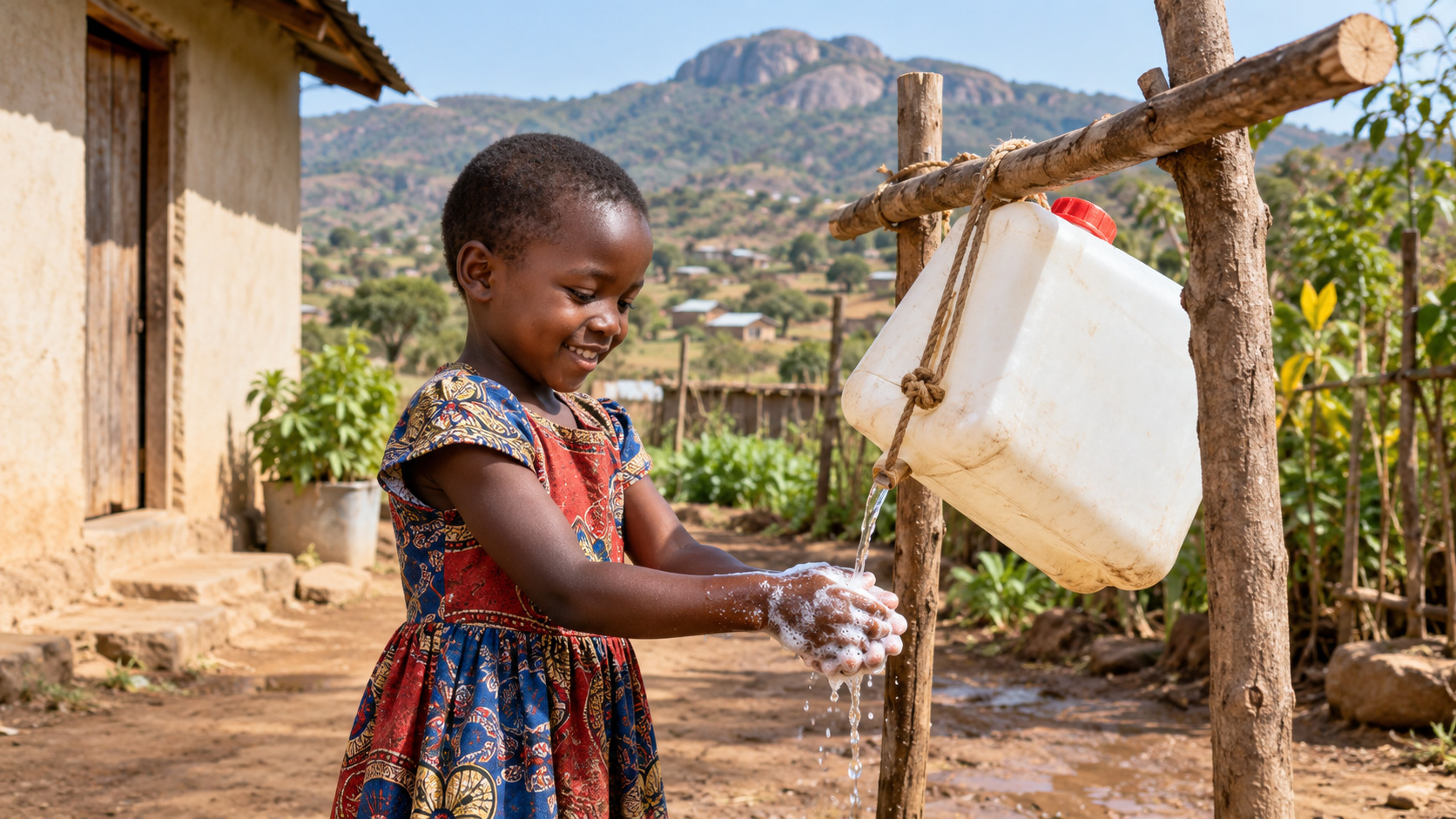
Clean Hands and Safe Water: Simple Ways to Prevent Illness at Home
Some of the most effective ways to protect your family’s health cost very little: soap, clean water and good habits. Yet diarrhoea and other infections spread through dirty hands and unsafe water still make many children and adults sick every year.
Global Handwashing Day is on 15 October. It is a good reminder for every home, school and workplace.
How germs spread
Germs from the toilet, nappies, raw meat, animals and sick people can easily get onto our hands. From there, they reach our mouths, food and the people we touch. Water from rivers, unprotected wells and open containers can also carry germs that cause diarrhoea.
Handwashing with soap and drinking safe water help prevent:
- Diarrhoea and stomach infections
- Typhoid and cholera
- Colds, flu and chest infections
- Eye and skin infections
- Worm infections
When to wash your hands
- Before preparing or eating food
- Before feeding a baby or child
- After using the toilet or pit latrine
- After changing nappies or cleaning a child
- After coughing, sneezing or blowing your nose
- After handling animals, livestock or manure
- After touching rubbish
- Before and after caring for someone who is sick
How to wash your hands properly
- Wet your hands with clean water
- Apply soap and rub to make a lather
- Scrub the palms, backs of the hands, between the fingers and under the nails
- Keep scrubbing for at least 20 seconds
- Rinse with clean running or poured water
- Dry with a clean cloth or let your hands air dry
Ordinary bar soap works well. Antibacterial soap is not necessary.
No tap? Make a tippy tap
Many homes and schools do not have running water close by. A simple tippy tap, made from a plastic container hung on a frame and tipped with a foot pedal or string, lets you wash with poured water without touching the container. Place one near the toilet and the kitchen area. Avoid washing hands in a shared bowl, as this can spread germs from one person to the next.
Making drinking water safe
If your water comes from a river, stream, spring or unprotected well, treat it before drinking:
- Boil it: Bring water to a rolling boil for at least one minute, then let it cool in a clean, covered container
- Use water treatment: Add a water-purification product or household bleach in the amount stated on the product
- Let it settle: If water is muddy, let it stand and pour off the clear water, or filter it through a clean cloth before treating
Store treated water in a clean container with a lid. Use a clean cup or tap to pour, rather than dipping cups or hands into the container.
Keep food safe too
- Wash fruit and vegetables with safe water
- Cook meat, chicken and eggs well
- Keep cooked food covered and away from flies
- Do not leave cooked food standing out for long in hot weather
Watch for dehydration
Diarrhoea can quickly lead to dehydration, especially in babies, young children and older people. Signs include:
- A dry mouth and tongue
- Very little urine, or dark urine
- Sunken eyes
- Unusual tiredness or drowsiness
- In babies, fewer wet nappies and a sunken soft spot on the head
Keep giving fluids. Oral rehydration solution (ORS) from a clinic or pharmacy is the best option. Keep breastfeeding babies.
When to get help
See a healthcare professional if:
- Diarrhoea lasts more than two days, or more than a day in a child
- There is blood in the stool
- There is a high fever
- The person cannot keep fluids down
Go to a hospital immediately, or call 977, if a child is very drowsy, floppy, not drinking or has signs of severe dehydration.
Speak to a TruMD Eswatini healthcare professional
If you or your child have diarrhoea, a stomach bug or an infection, a TruMD Eswatini healthcare professional can assess symptoms, advise on care at home, prescribe medication where needed and provide a sick note for school or work.
Clean hands and safe water protect the whole family. This Global Handwashing Day, make them a daily habit.