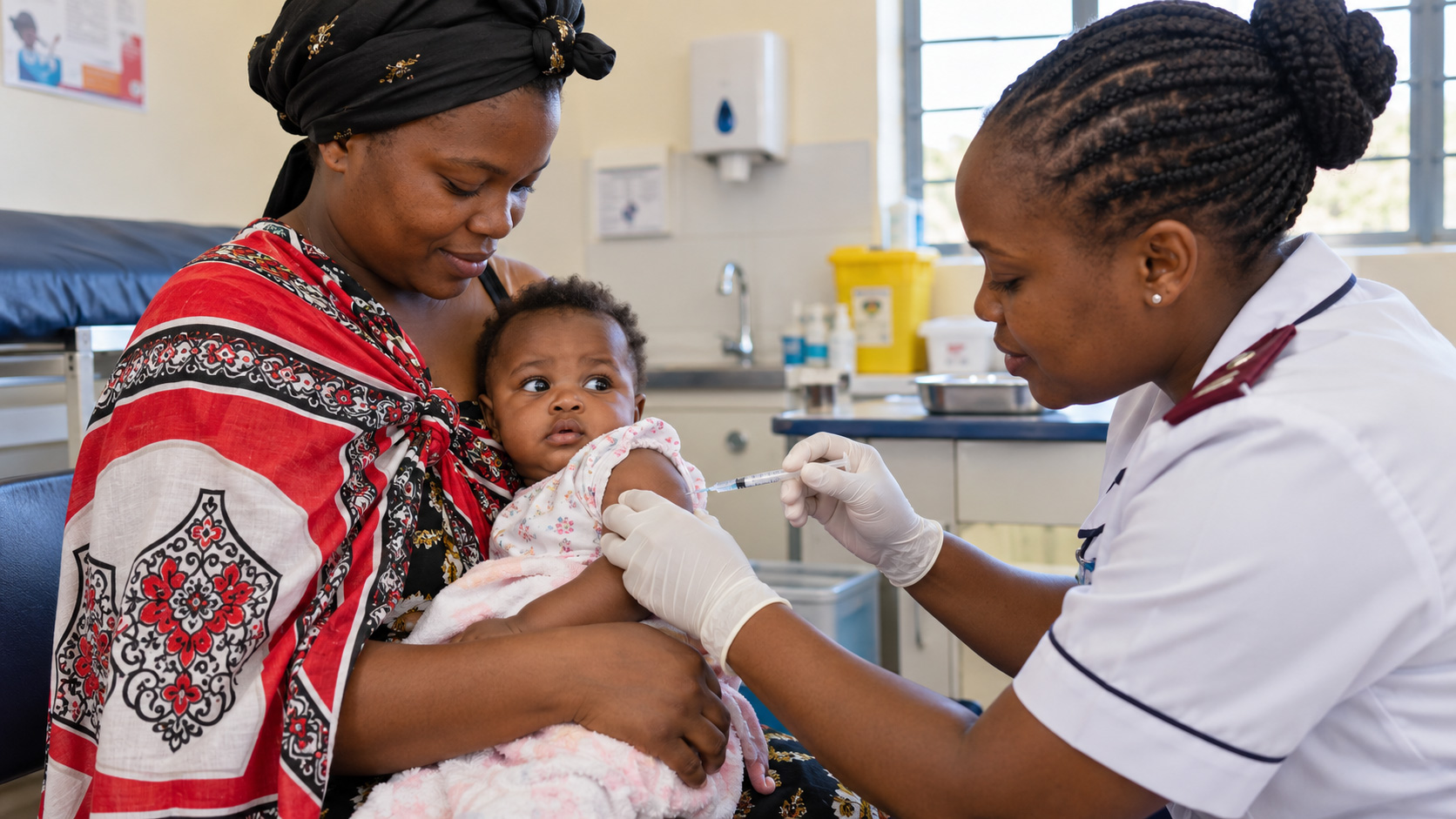
Is Your Child’s Vaccination Card Up to Date? Why Childhood Vaccines Still Matter
Vaccines are one of the greatest success stories in health. Diseases that once killed or disabled thousands of children, such as polio and measles, are now rare in many countries, including Eswatini. But they have not disappeared from the world, and they can return when too many children miss their vaccines.
World Polio Day is on 24 October. It is a good time to take out your child’s vaccination card and check that every dose has been given.
How vaccines work
Vaccines teach the body’s immune system to recognise and fight a specific germ, without the child having to get sick first. If the child is exposed to that disease later, their body is ready to fight it off.
When most children in a community are vaccinated, it also protects babies who are too young for some vaccines, and children who cannot be vaccinated for medical reasons.
What childhood vaccines protect against
Through Eswatini’s national immunisation programme, children receive vaccines at clinics that protect against diseases such as:
- Polio
- Measles and rubella
- Tuberculosis (TB)
- Diphtheria, tetanus and whooping cough
- Hepatitis B
- Pneumonia and meningitis caused by certain bacteria
- Rotavirus, a major cause of severe diarrhoea in babies
Your clinic will guide you on which vaccines your child needs and when.
Why polio still matters
Polio is a viral infection that can cause permanent paralysis. There is no cure, but it can be prevented with vaccines. Thanks to vaccination, polio has been wiped out in most of the world, but it still exists in a few countries. As long as it exists anywhere, children who are not vaccinated are at risk.
Every dose counts
Many vaccines need more than one dose to give full protection. Missing a dose can leave a child only partly protected. That is why it is important to:
- Keep your child’s vaccination card or health booklet safe
- Take it with you to every clinic visit
- Check the date of the next visit and write it somewhere you will see it
- Ask the nurse if you are unsure which vaccines are still due
Missed a dose? It is not too late
Life gets busy. Families move, travel or simply forget. If your child has missed a vaccine, take them and their card to the clinic. In most cases, the nurse can give a catch-up dose without starting again.
If you have lost the card, tell the nurse. They can help work out what your child still needs.
Common worries about vaccines
“My child will get sick from the vaccine.” Some children have a mild fever, fussiness or a sore spot where the injection was given. This usually passes within a day or two. Serious reactions are very rare.
“My child is sick today. Should we still go?” A mild cold is usually not a reason to delay. Ask the nurse if your child has a high fever or is very unwell.
“These diseases are gone, so vaccines are not needed.” These diseases are rare because of vaccines. If vaccination rates drop, outbreaks can return.
Vaccines are not just for babies
Older children and adults need vaccines too. Ask your clinic about the HPV vaccine for girls, which helps protect against cervical cancer. Adults should keep up to date with tetanus vaccines and may be advised to get a flu vaccine. Pregnant women may also be offered vaccines that protect both mother and baby.
Speak to a TruMD Eswatini healthcare professional
If you are unsure whether your child’s vaccines are up to date, have questions about side effects, or your child has a fever after a vaccine, a TruMD Eswatini healthcare professional can answer your questions and advise you on next steps.
This World Polio Day, check the card, book the visit and protect your child’s future.